
Understanding truffle growing
A year in a truffle grove: understanding seasonal work
Winter hunting is only part of the work. Trees, soil and water are observed throughout the seasons, with actions adapted to each plot.
Updated
The topic guide : Understanding truffle growing
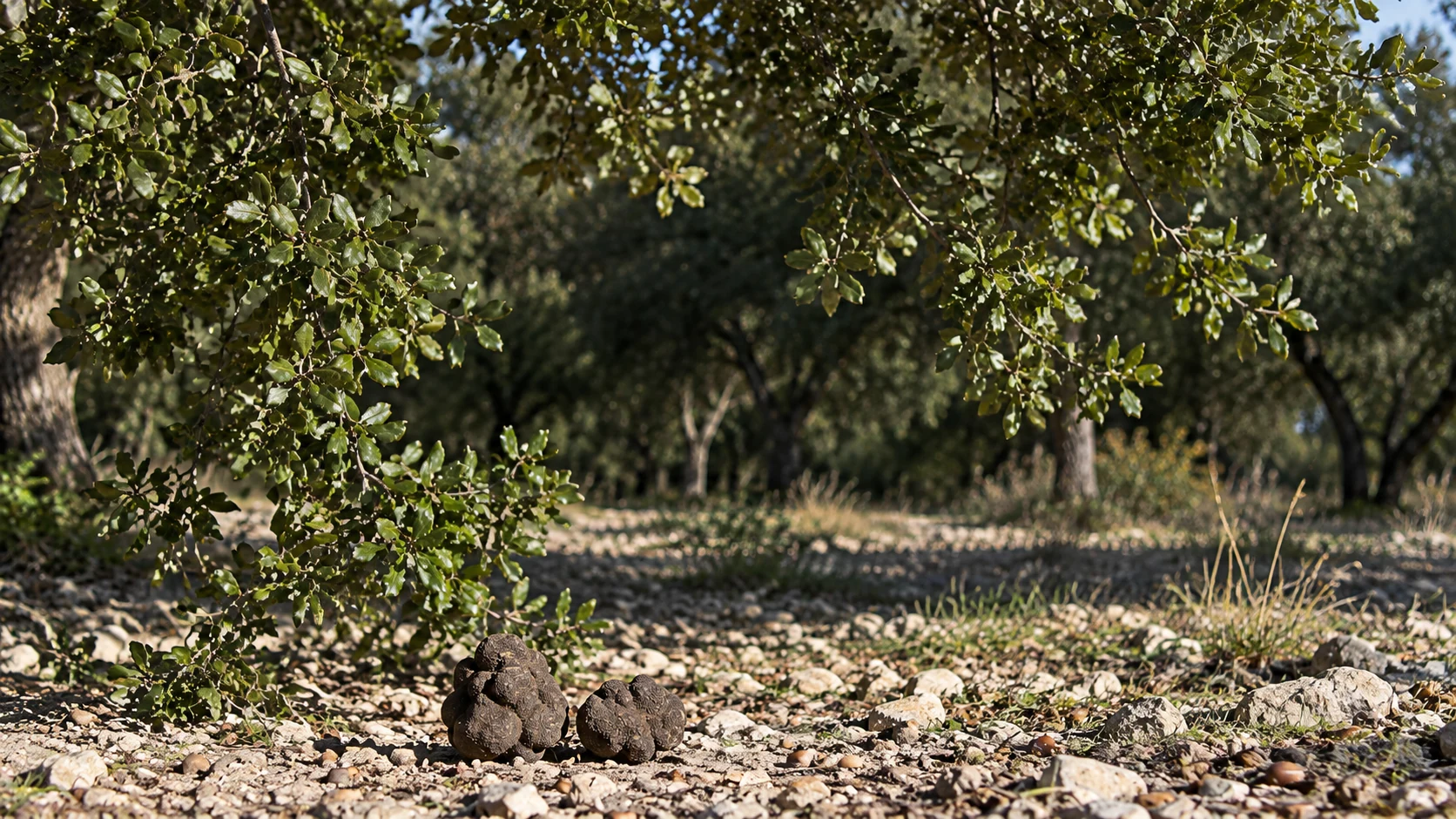
Spring: review and plan monitoring
After harvest, a useful review gathers dates, monitored areas, weights and recorded work. It helps prepare questions for the next season. Soil work and tree management depend on the plot; a general calendar is a reading guide, not a universal prescription.
Summer: monitor water and ground conditions
Dry periods make water monitoring especially important. Record observations and available measurements rather than inferring needs from a single rainy day. Any irrigation is guided by the soil and technical advice. INRAE's water-management research illustrates the value of monitoring over time.
Autumn: prepare visits and enquiries
Visitors and buyers can specify preferred dates, group sizes and meal plans. The House confirms possibilities according to the season and its organisation. Forecasts must not be presented as harvested stock. Our seasonal guide distinguishes these pointers from confirmed availability.
Winter: search, select and explain
Searching with dogs makes part of the work visible. Finds are examined before use or sale, and offered batches depend on the harvest. Ask how the day's observations fit the annual monitoring. This guide explains seasonal questions; it is not a record of a year already documented by the House.