
Understanding truffle growing
Soil, water and climate: what affects black truffle development?
Water availability and soil functioning matter in a grove. Observing them together helps explain a season without reducing harvests to one weather indicator.
Updated
The topic guide : Understanding truffle growing
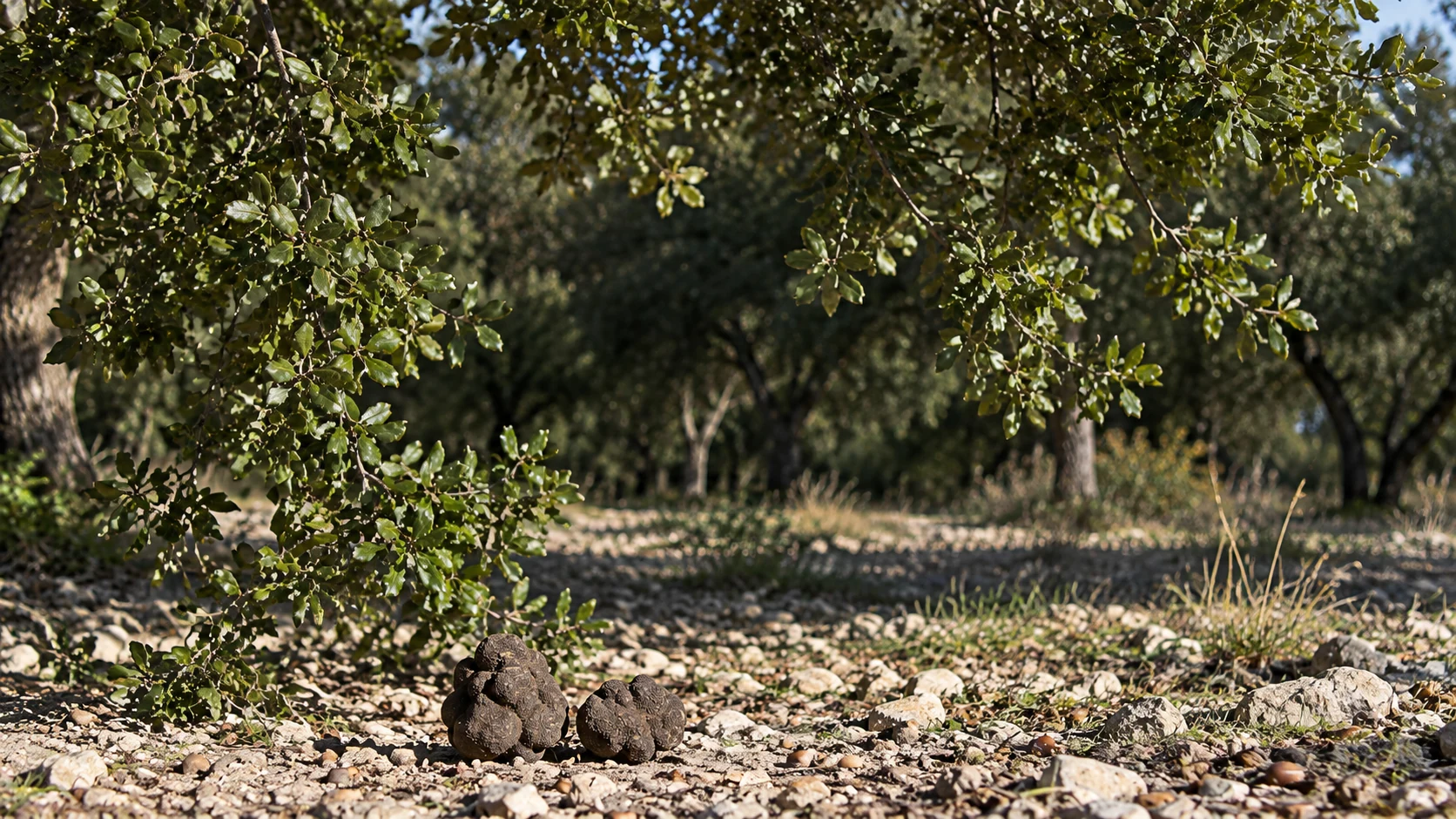
Available water, not rainfall alone
Rainfall alone does not describe water available in the soil. INRAE presents water monitoring as a way to guide irrigation and notes that excess water can also be harmful. Before transferring an irrigation instruction, understand the ground, available measurements and the plot's circumstances.
Describe the soil before deciding
For a project, gather existing soil analyses, the plot's history and information about water access. Note standing-water areas and visible differences across the site. These help frame questions for an adviser. A general article cannot prescribe soil amendments or irrigation for an unassessed plot.
Distinguish observation from explanation
A smaller harvest is an observation that needs a date, area or monitoring context. Attributing all of it to heat requires more evidence. Research programmes compare several parameters across seasons. This helps explain variation to visitors without presenting one cause as certain.
Questions for the grower
Ask what is measured, for how long and how it informs the work. During a hunting workshop, connect these explanations to the ground, trees and dog's search. If you want to establish a grove, seek local agronomic support; the visit is an introduction.