
Understanding truffle growing
Oak, hazel and truffles: understanding host trees
A truffle tree is associated with the fungus through its roots. Choosing a plant suited to a site takes more than a species name or a harvest promise.
Updated
The topic guide : Understanding truffle growing
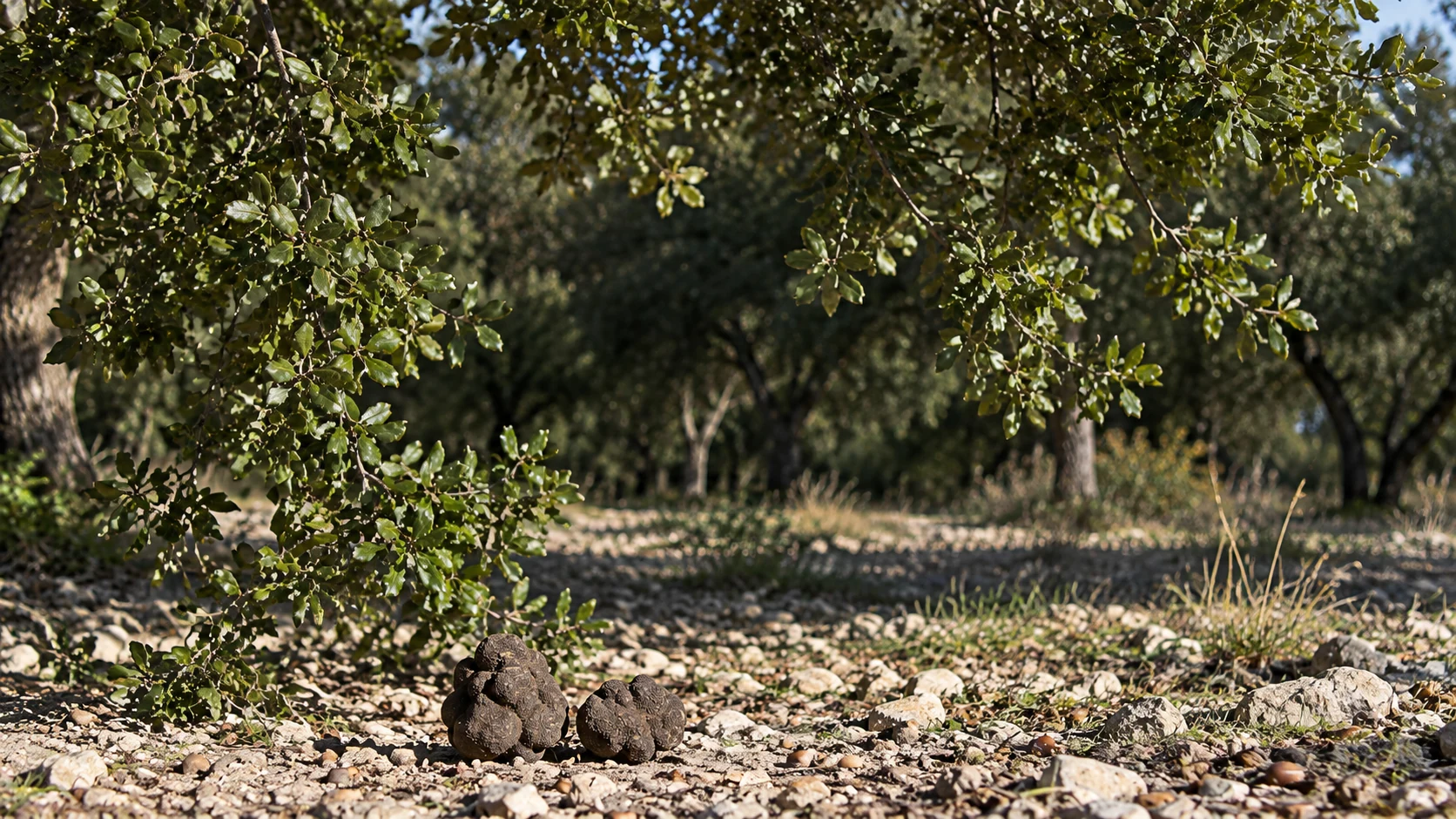
Which trees might you see?
Oaks and hazels are among the trees associated with truffles. Southern truffle-growing references include holm oak and downy oak. Ask which species actually grow on the plot you visit. 'Truffle tree' describes the intended association with the fungus, not a single tree variety.
Why is it called a host tree?
The fungus lives in association with the tree's roots. 'Host' describes this biological relationship; it does not mean truffles grow on branches. Identifying trees during a visit helps explain the plot but cannot reveal the number of truffles beneath each one.
What is a mycorrhizal plant?
Mycorrhization associates the young tree with a fungus. When buying plants, ask which truffle species is involved and what checks accompany the plants. Keep supplier documentation. Confirming a root association is different from promising a future harvest, which also depends on the site and its development.
Choose for the plot
Discussions about oak or hazel should begin with the site and project. Prepare soil characteristics, climate, water resources and maintenance capacity. Have a professional familiar with the area compare options. A plant catalogue cannot establish planting density, a work schedule or expected income.
What you can observe on site
Ask about tree ages, management aims and differences across the grove. Connect these explanations to space for the dog and care during hunting. A workshop makes the questions concrete. The growing guide introduces other environmental factors and research sources.