
Understanding truffle growing
How does a truffle grow? The relationship between fungus and tree
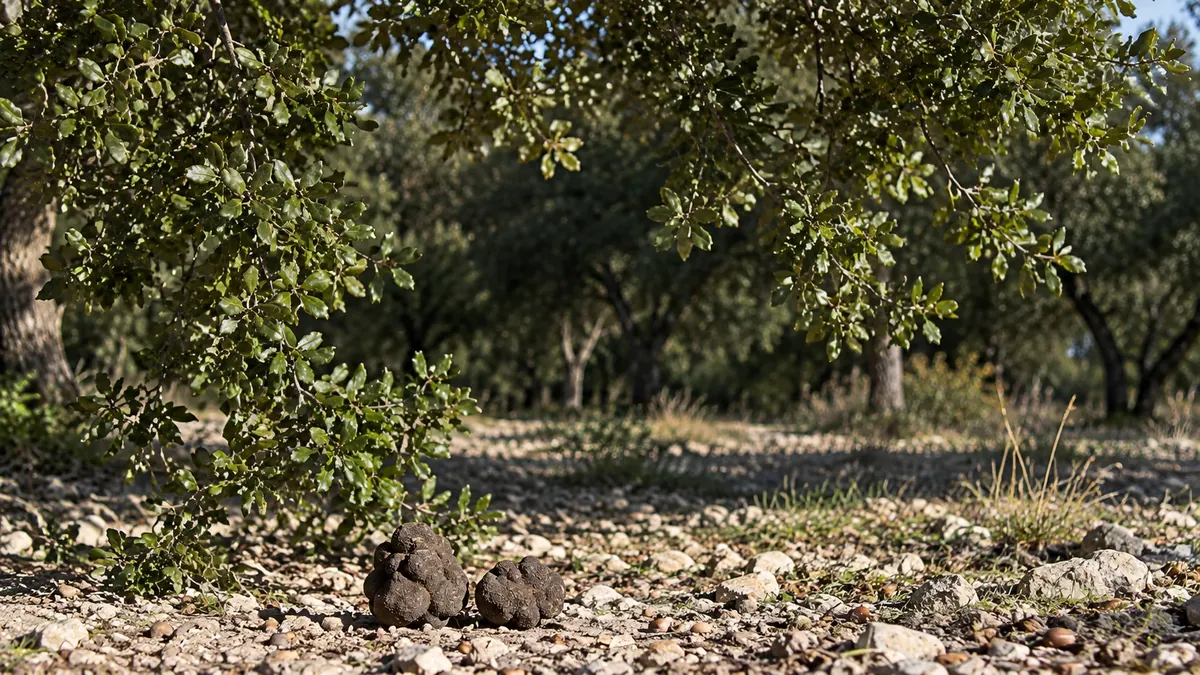
The harvested truffle is a fungus's underground fruiting body. Understanding it means looking at its relationship with tree roots and life in the soil.
Written by the La Truffe française teamUpdated on
Updated
The topic guide : Understanding truffle growing
The visible truffle and the fungus in the soil
The piece placed on the scales is not the whole fungus. It also grows as filaments called mycelium. Fruiting is one stage of its life. This helps explain why a plot can harbour the fungus without producing an identical harvest each year, and why management extends beyond hunting days.
Mycorrhiza: an association with roots
Mycorrhiza is a meeting point between fine roots and fungal filaments. INRAE describes exchanges in which the plant supplies sugars while the fungus contributes mineral nutrients. In truffles, the association is an ectomycorrhiza. The tree is therefore more than a support above a buried crop.
Production depends on the environment
Soil, water, climate and the tree all contribute to the grove. One rainy day cannot predict the winter harvest. Interpreting a result requires the plot, period and observations. ClimaTruf's work illustrates the value of monitoring over time rather than promising a yield from tree numbers alone.
Observe during a visit
During a hunt, the dog helps locate fruiting bodies; it does not reveal the whole fungus in the soil. A visit lets you distinguish the piece being uncovered from the environment that made its development possible. Look at the trees and ground, then ask what that day’s observations actually tell you about the plot.
Sources and references
Our editorial approach
La Truffe française is responsible for these guides. Information about our offer comes from the House; technical resources cited in each article are identified separately.