
Recipes
Cooking black truffles: advice from Éric Coisel
Freshness, butter, gentle heat and finishing touches: advice from Éric Coisel, former chef at Prunier in Paris, for making black truffle count on the plate.
A fresh, fragrant truffle, a simple base and some added at the last moment: this is the starting point of Éric Coisel’s advice. The House welcomed the former chef of Prunier in Paris, an institution known for caviar and seafood. Here, La Truffe française presents an editorial adaptation of his culinary recommendations for the black truffle Tuber melanosporum. The separately identified hygiene guidance comes from ANSES.
Updated
The topic guide : Cooking and storage
Start with the batch, not the recipe
Ask about the species, harvest location, producer, harvest date and dispatch date. A short supply chain makes that conversation easier but does not replace the information. With melanosporum, dark flesh with white veins, a firm texture and a distinct aroma are clues to consider together. Appearance alone does not establish freshness or maturity: smell the truffle before choosing how to prepare it.
Plan the meal close to delivery. For two occasions some time apart, buying fresh 50 g portions twice may make more sense than keeping 100 g for a long time. The suggested guide of 8 to 15 g per person varies with the dish and the strength of the aroma. Sharing 50 g among four diners gives 12.5 g each; that calculation allocates a quantity, not a guaranteed aromatic intensity.
Keep chilled, prepare just before use
Keep the truffle in a closed container with absorbent paper, replacing the paper when damp. Check its smell, firmness and any soft areas daily. Rice absorbs moisture and can dry the truffle out, so avoid using it for prolonged storage. Follow the supplier’s instructions for your batch. ANSES recommends 0 to 4°C in the coldest part of the refrigerator; that is a temperature guide, not a shelf life.
Before use, brush the truffle gently; if needed, rinse briefly under a trickle of cold water and dry immediately. Do not soak it. The peridium, its outer skin, is edible when the truffle is sound and clean. Save clean trimmings for butter or sauce. Slice or grate at the last moment; a few minutes out of the refrigerator are enough to prepare serving, without leaving preparations standing at room temperature.
Build the aroma in three stages
Butter, cream, egg yolk and mild cheese are useful bases. Making truffle butter ahead allows contact time in the refrigerator; extending that contact for several days is not automatically beneficial. Whole eggs in intact shells can share a closed refrigerated container with a clean, dry truffle for 24 to 48 hours. This infusion guide does not extend the ingredients’ shelf lives.
A simple method is to divide the truffle into three: one part to flavour the base, one stirred in off the heat and one for finishing. Thirds are a guide, not a rule. Grating distributes the aroma; a fine dice adds texture; thin slices finish the plate. Avoid saving everything for a few decorative slices: mixing some into the preparation brings truffle into each mouthful.
Add after cooking, keeping aroma and safety distinct
Avoid frying the truffle, boiling it or cooking it for a long time when preserving its aroma is the aim. For risotto, mash or pasta, finish cooking first, then stir in the grated portion off the heat. There is no single temperature here that applies to every recipe. Heat chosen for truffle aroma never replaces the cooking required for eggs, meat or poultry.
For eggs and poultry, follow ANSES hygiene precautions: refrigerate preparations awaiting cooking and cook sufficiently. Vulnerable people should avoid raw or lightly cooked eggs. If you put truffle slices under poultry skin, keep the bird refrigerated before cooking it normally and thoroughly; do not shorten cooking to preserve the truffle.
Choose a simple base and adjust by tasting
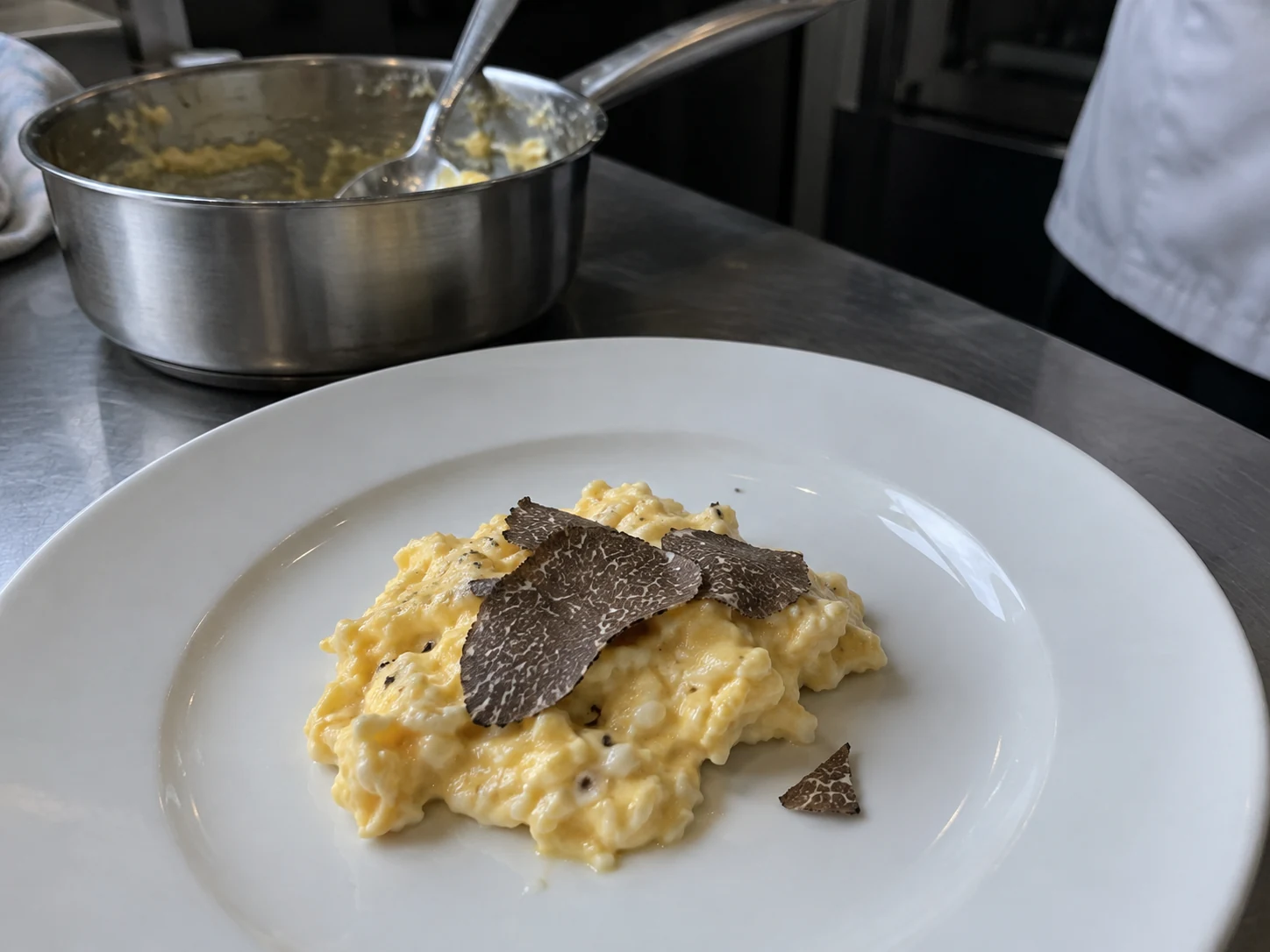
Potatoes, eggs, rice, pasta, celeriac and poultry leave room for the aroma. For pasta, combine butter with starchy cooking water before adding truffle off the heat. With potatoes, start with jacket potatoes or buttery mash. Cook scrambled eggs gently and finish with butter and truffle after cooking. In each case, save a few slices for serving.
Use garlic, chilli, blue cheese, vinegar, smoky flavours and Parmesan moderately. Strongly flavoured oil can also dominate. Salt gradually, taste, and add truffle in small amounts instead of all at once. Serve on a warmed plate without making it scorching hot. Showing the whole truffle before slicing, or briefly using a cloche, can accompany the service; balance in the dish remains the priority.