
Know-how
Melanosporum or Brumale: Two Different Black Truffles
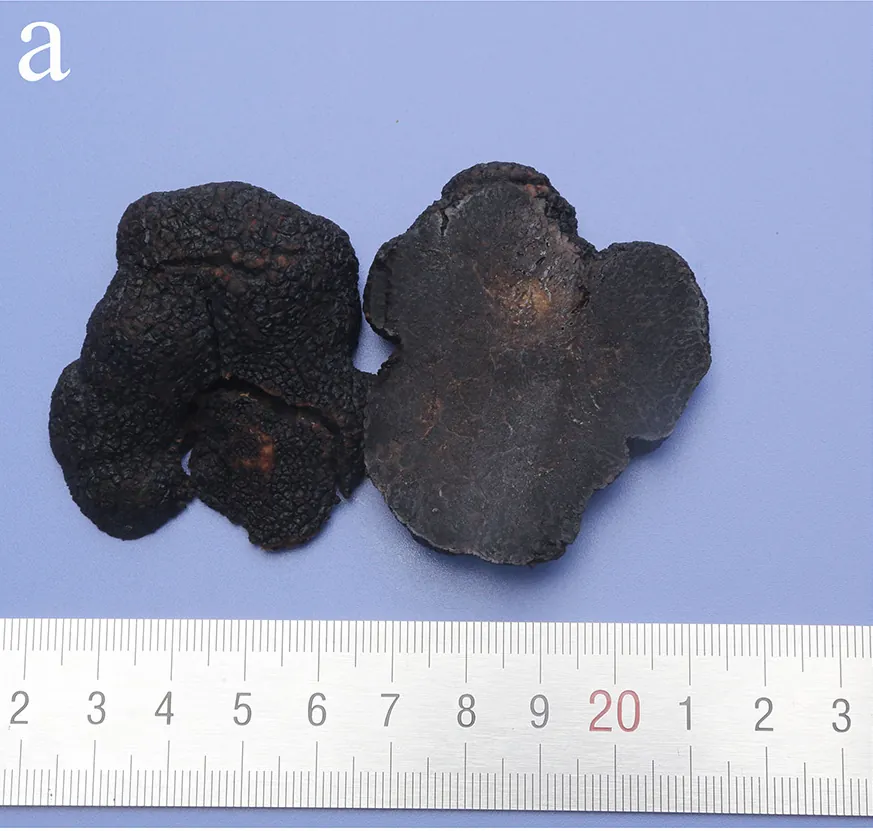
Melanosporum and brumale are different species with different aromas and uses. The batch description must distinguish them; a photograph of a whole truffle cannot identify the species on its own.
Written by the La Truffe française teamUpdated on
La Truffe française · Identification · appearance, cut, aroma and cooking
Updated
The topic guide : Buying and choosing
Two species, never interchangeable
Tuber melanosporum and Tuber brumale are distinct species found during winter. Their exterior can look similar; identification relies on several indicators and, when in doubt, the opinion of an experienced person.
What to observe
- The cut surface: the colour of the flesh and the delicacy and pattern of the white veins.
- The aroma: deep and complex in melanosporum, often more direct and musky in brumale.
- Texture and maturity: assessed specimen by specimen, never from exterior colour alone.
In the kitchen
For Tuber melanosporum, start with eggs, risotto or poultry and add some truffle at the finish. Brumale has its own character: a recipe written for one species does not automatically give the same result with another. The House currently offers only Tuber melanosporum from our own French harvest; this guide discusses brumale for comparison.
A photograph is not enough for a purchase
Ask for the species name in the batch description. Even a clear photograph cannot establish every identification criterion. If uncertain, have a qualified person check the product; analytical methods exist. Do not automatically transfer one species' price to another. Compare species, weight, origin and condition together.
Sources and references
Our editorial approach
La Truffe française is responsible for these guides. Information about our offer comes from the House; technical resources cited in each article are identified separately.