
Buying and choosing
Fresh truffle, sauce or flavouring: what are you buying?
A 100 g jar containing 3% truffle provides 3 g of truffle. That changes the comparison with a fresh piece, even when both products feature truffles on their packaging.
Updated
The topic guide : Buying and choosing
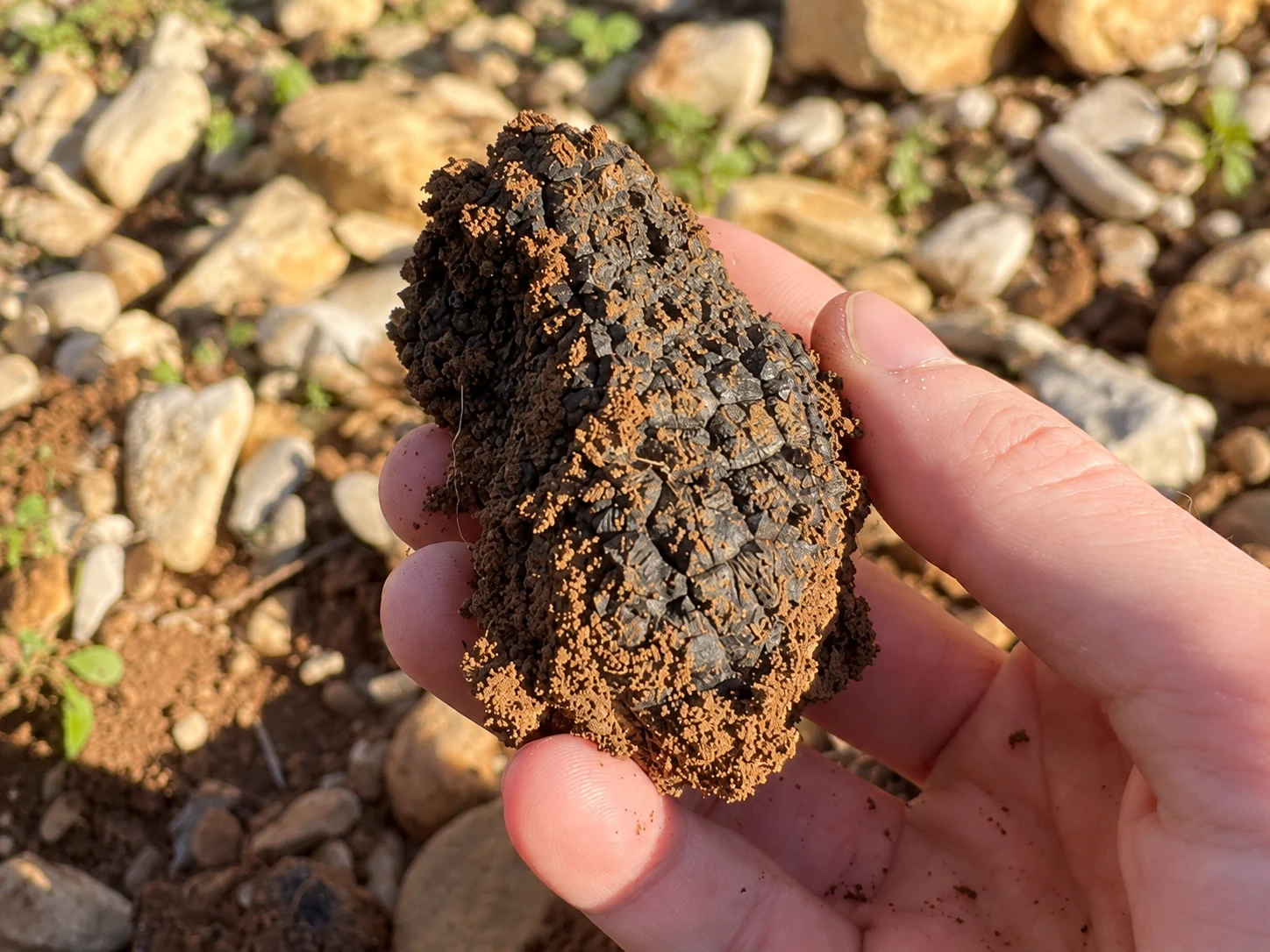
Turn the jar around
Start with the ingredients. Note the species, truffle percentage and any flavouring. The French order of 19 March 2015 identifies black or Périgord truffle as Tuber melanosporum and summer truffle as Tuber aestivum. Those names refer to different species.
When comparing two jars, also note the net weight. A smaller, more concentrated jar can contain more truffle than a larger jar with a lower percentage. The percentage alone does not tell you how much you are buying.
Convert the percentage into grams
Take two hypothetical labels. Jar A weighs 100 g and contains 3% truffle: 100 × 3 ÷ 100 = 3 g. Jar B weighs 180 g at 2%, giving 3.6 g. The second contains more truffle overall, but less in a spoonful of the same weight.
This calculation measures ingredient weight, not aroma or how good the preparation tastes. Comparing flavour requires tasting the products; these examples are not a brand test.
Check the flavouring too
France’s DGCCRF notes that some oils referring to truffles contain only added flavourings. It also explains that a flavouring is not necessarily extracted from truffles. A flavouring declaration therefore cannot establish a truffle weight.
A product can contain both truffle and flavouring. Read the two declarations separately. If the online description is unclear, ask for a photograph of the ingredients before ordering.
Choose for the dish you are making
Our risotto uses 30 to 40 g of fresh truffle for four people. Replacing 40 g of truffle with 40 g of a 3% sauce supplies just 1.2 g of truffle. Reaching 40 g mathematically would require about 1.33 kg of that sauce: it would be a different recipe. For slices at serving, ask for a fresh piece suited to that use.